Viduraවිදුර
Learn from any English YouTube video — in Sinhala.
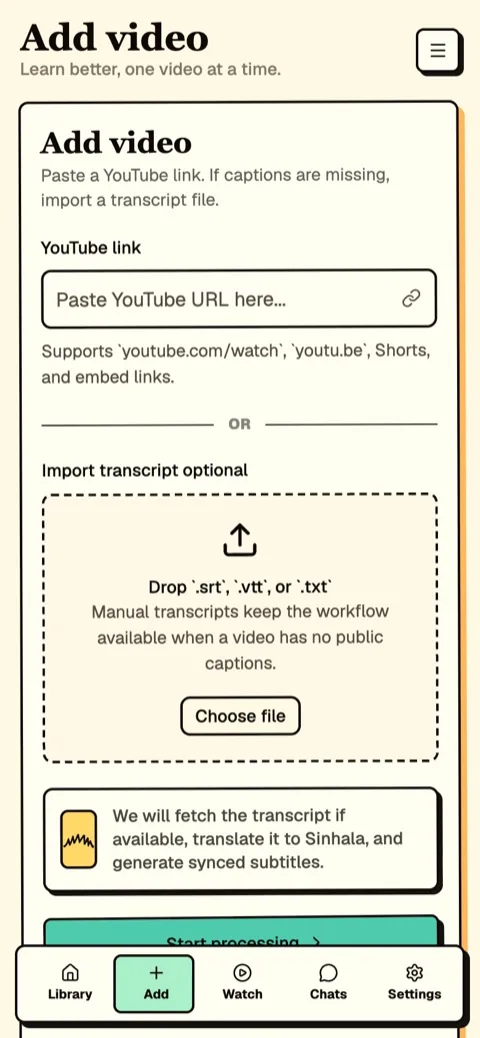
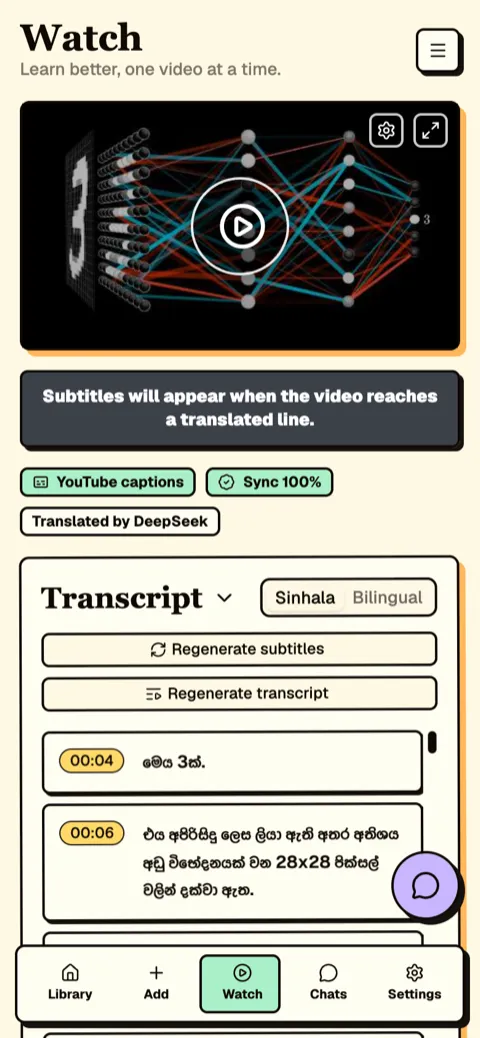
Watch any English lesson on YouTube with Sinhala subtitles that read like something a person would actually say, in sync with the video.
- Sinhala subtitles, in sync
- One translation call per video
- Chat grounded in what you watched
- Your library on your server
In Sinhala
Learn from any YouTube lesson
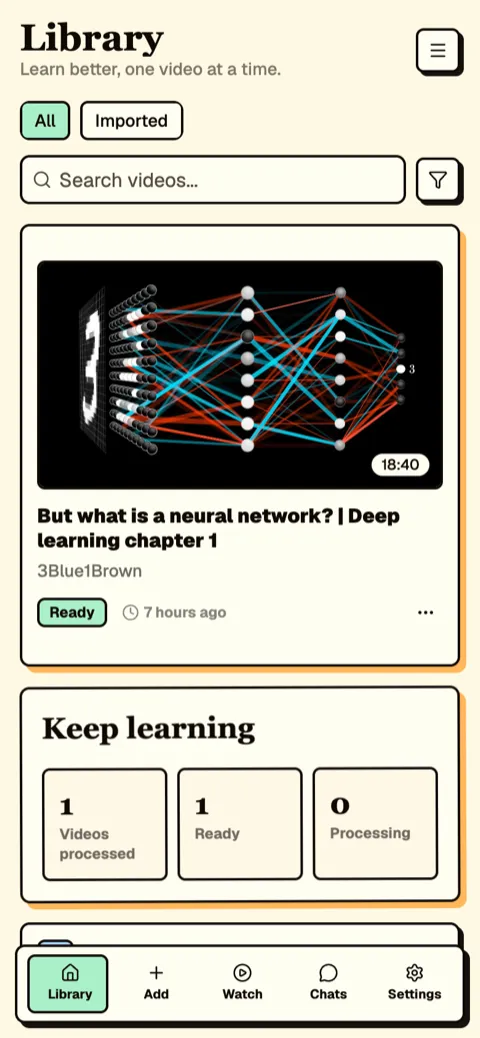
Your own library
Every video you translated
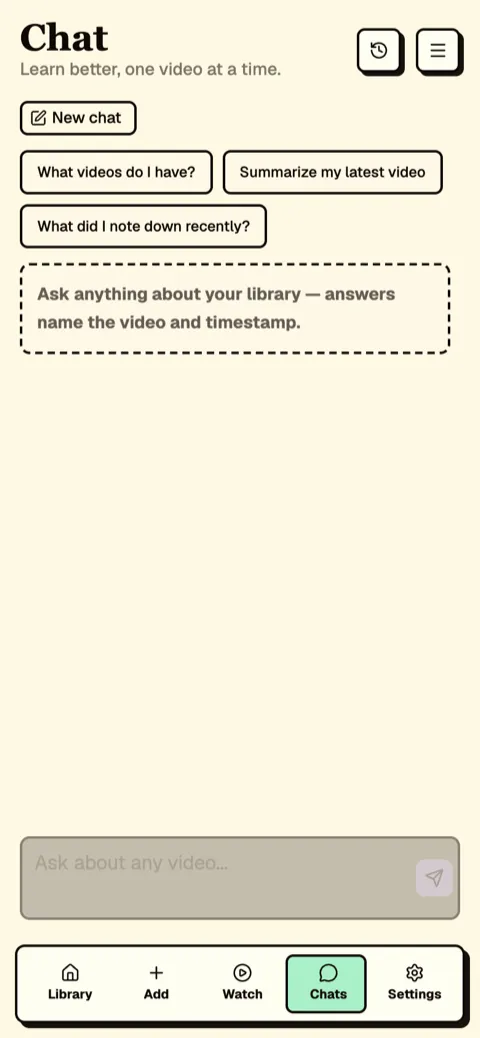
Ask about the lesson
Answers from the transcript
Per video
1 call
translated with full context
- 1
- Translation call per video, with full context
- PWA
- Installable, works on any phone
- Self-hosted
- Your library stays on your server
- සිංහල
- Default language, not the limit
Why I built it
The best teaching on YouTube, in maths, programming and science, is overwhelmingly in English. For a Sinhala speaker, that turns a twenty-minute lesson into an hour of rewinding. YouTube’s automatic Sinhala captions are word-by-word and close to unreadable, and commercial dubbing services do not cover the language.
Vidura (විදුර) fetches a video’s transcript, translates it properly, and lays the subtitles over the player.
The first problem: getting the transcript at all
My first version worked perfectly on my laptop and failed the moment I deployed it. YouTube treats requests from datacentre addresses as bots, and a cheap VPS lives squarely inside those ranges. No amount of retrying changes that.
The pipeline that shipped has two paths, ordered by quality:
- YouTube’s own caption track, fetched through a residential proxy. These timestamps are frame-accurate, so this path is preferred.
- Audio transcription as the fallback, when there is no caption track. It lands within about three seconds, which is fine for following a lecture and visibly worse for tight subtitle sync.
Because the two paths are not equal, every video says which one it used. A badge shows where the timestamps came from, a computed sync score, and the model that translated it. When the data is lower fidelity, the interface says so.
The second problem: translation that reads like speech
Translating caption by caption produced a very specific kind of bad. One English term became three different Sinhala words across a lecture; sentences broke in the middle; pronouns lost what they referred to. The cause is simple once you see it: a caption cue is not a sentence. It is wherever the speaker happened to pause.
So Vidura translates the whole transcript in one structured call, with the video’s title and description for grounding. The model reads the full lecture before it translates a single line, which keeps terminology consistent from minute two to minute forty. Two guardrails protect the result: the core prompt cannot be altered by tone settings, and an alignment check validates the output against the source cues before anything is saved.
Beyond subtitles
- Chat grounded in what you have watched. Ask about one video or your whole library; answers cite the video and the timestamp.
- Notes pinned to exact moments.
- Live progress and a push notification when a video finishes processing.
Where it stands
Actively maintained and live. Sinhala is the default, but the target language is a setting.
In pictures
A closer look
On a phone